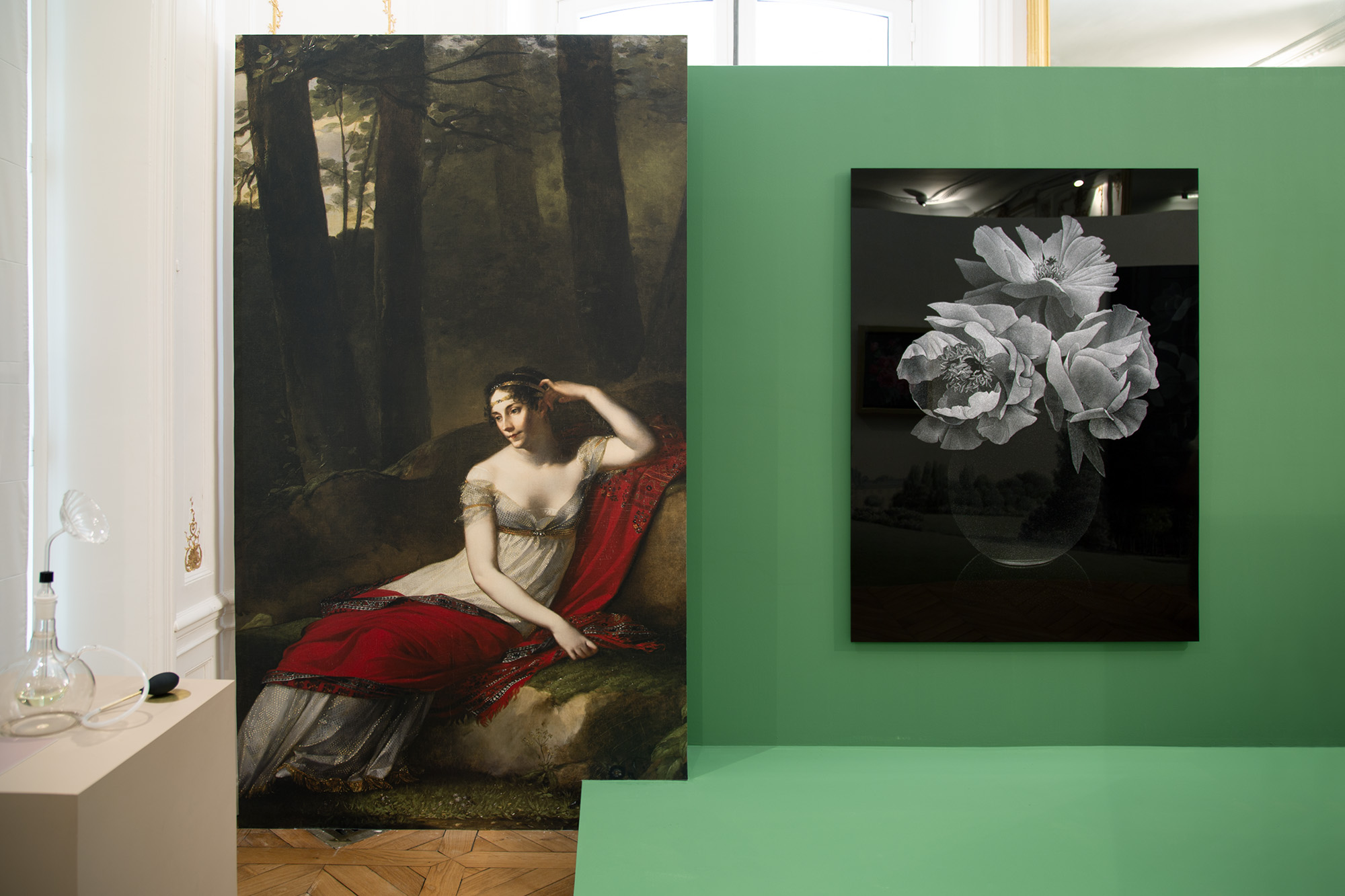
The Château de Malmaison is indelibly associated with the history of Napoléon Bonaparte and Joséphine de Beauharnais, who made it one of their favorite residences. Yet the estate is even more renowned for Joséphine’s garden, which, in the early nineteenth century, became a place of botanical ambition, scientific enquiry and cultural distinction. With remarkable dedication, Joséphine established an international network of botanists and plant collectors who supplied Malmaison with rare species from the Americas, Africa and the Far East. Among the most exceptional of these were precious peonies sent by the Emperor of China, then among the first of their kind to be exported to the Western world.
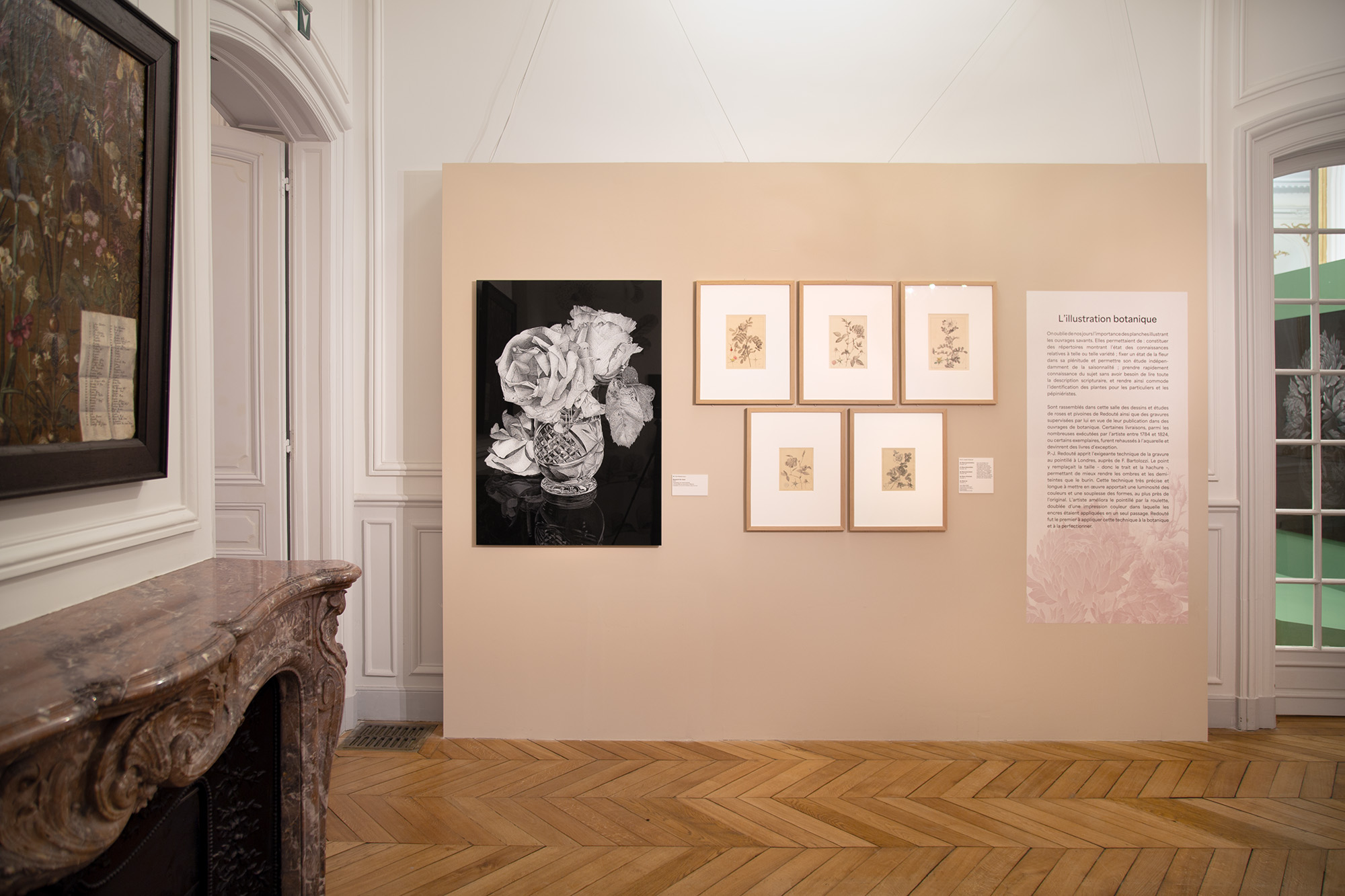
In order both to document her collection and to project the prestige it embodied, Joséphine commissioned the Belgian botanist and illustrator Pierre-Joseph Redouté (1759–1840). His celebrated publications, including Jardin de la Malmaison (1803–04), Les Liliacées (1802–16) and Les Roses (1817–24), remain indispensable to the history of botanical illustration. The images they contain have had a lasting impact not only on the representation of plants in scientific and artistic contexts, but also on the broader visual culture of floral ornament, from wallpaper and textile design to porcelain decoration.
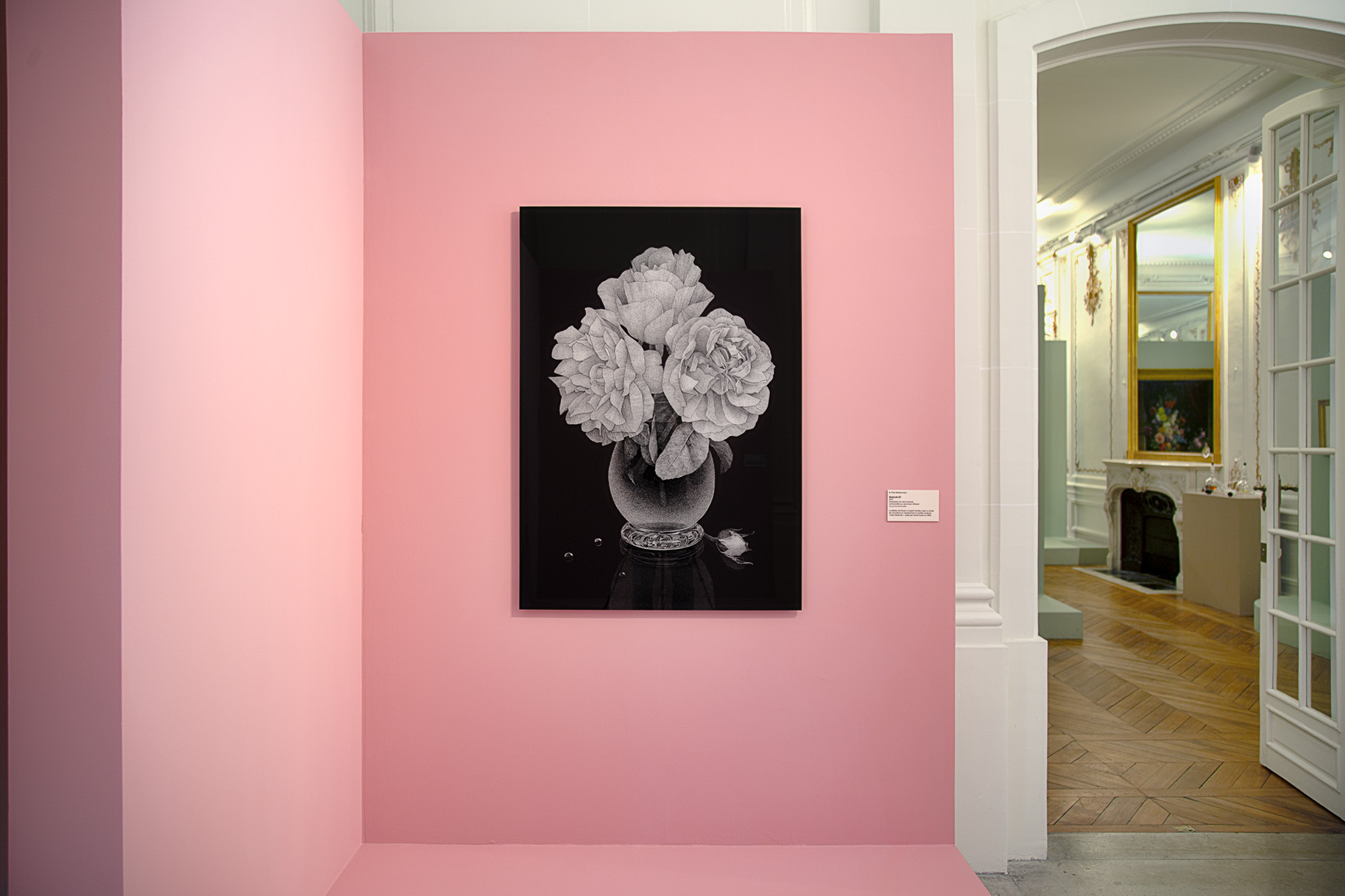
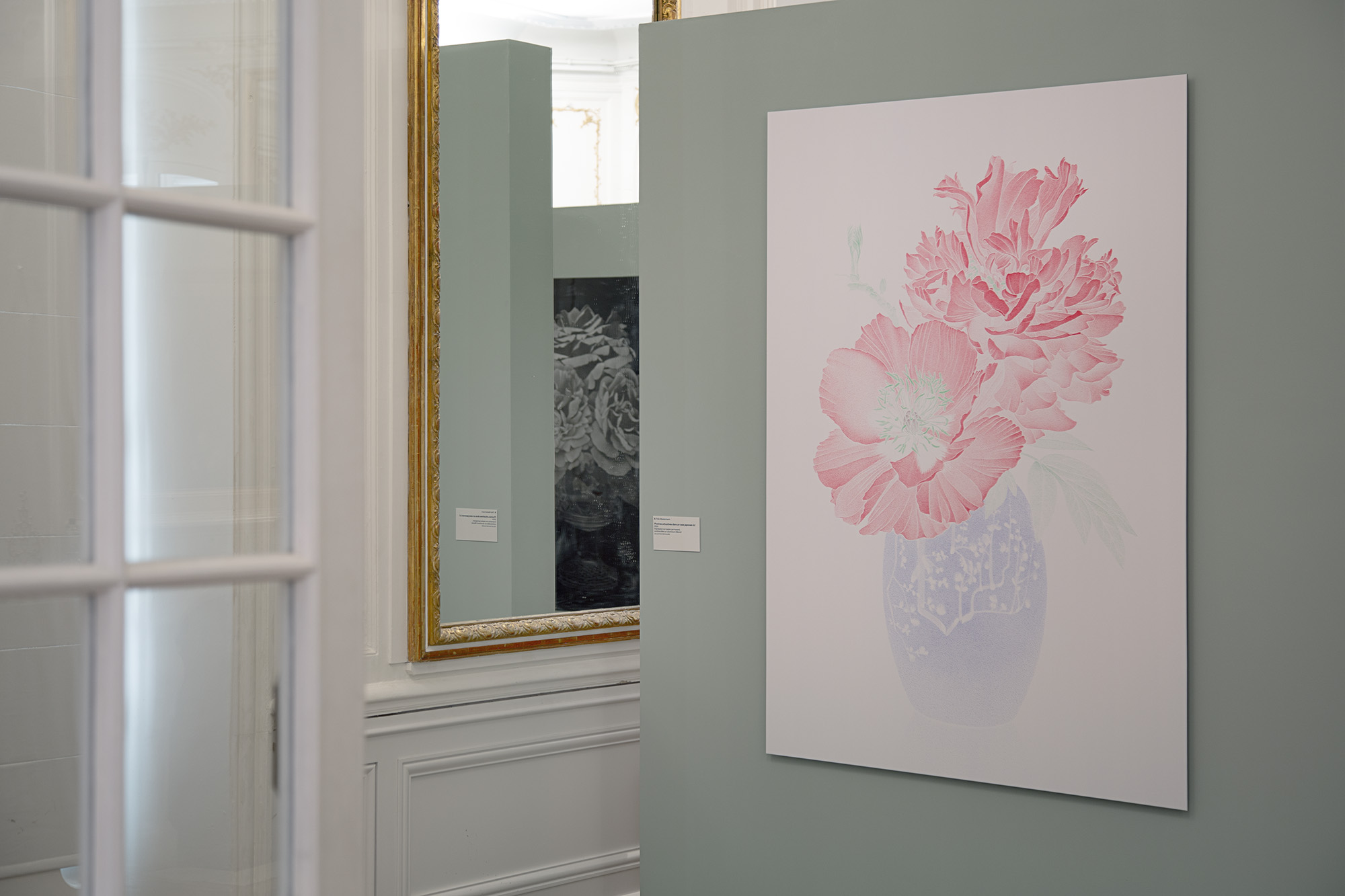
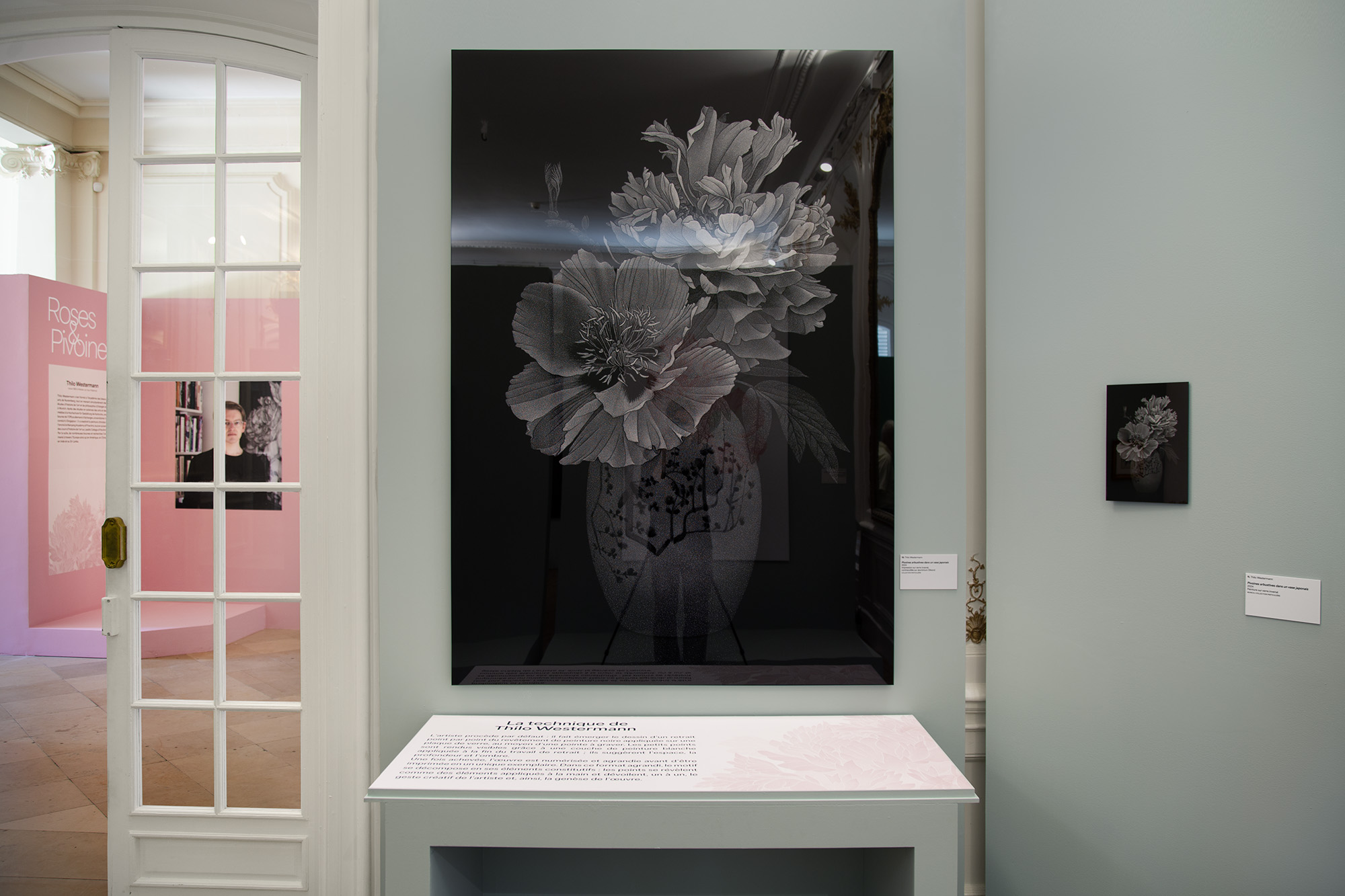
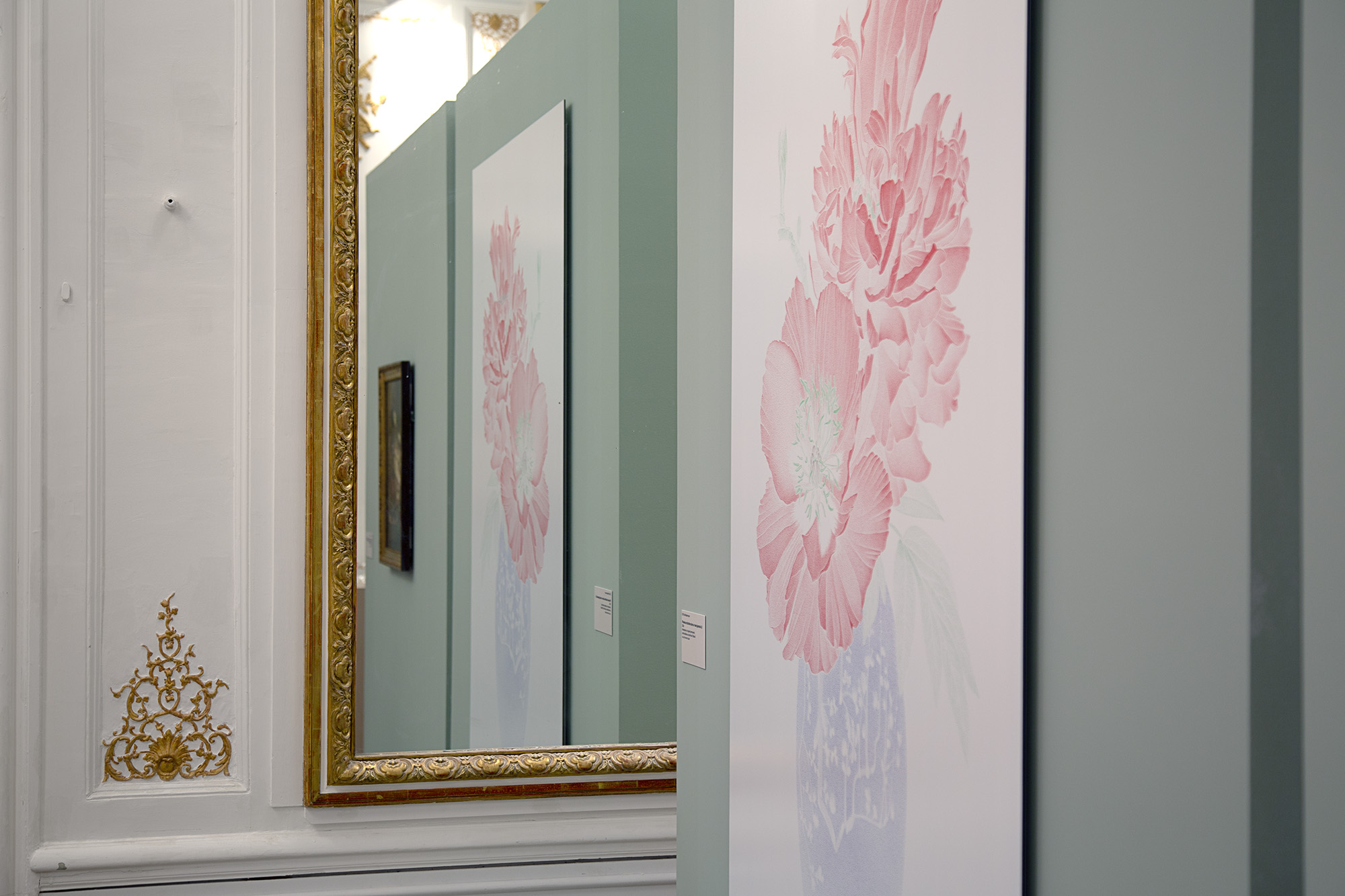
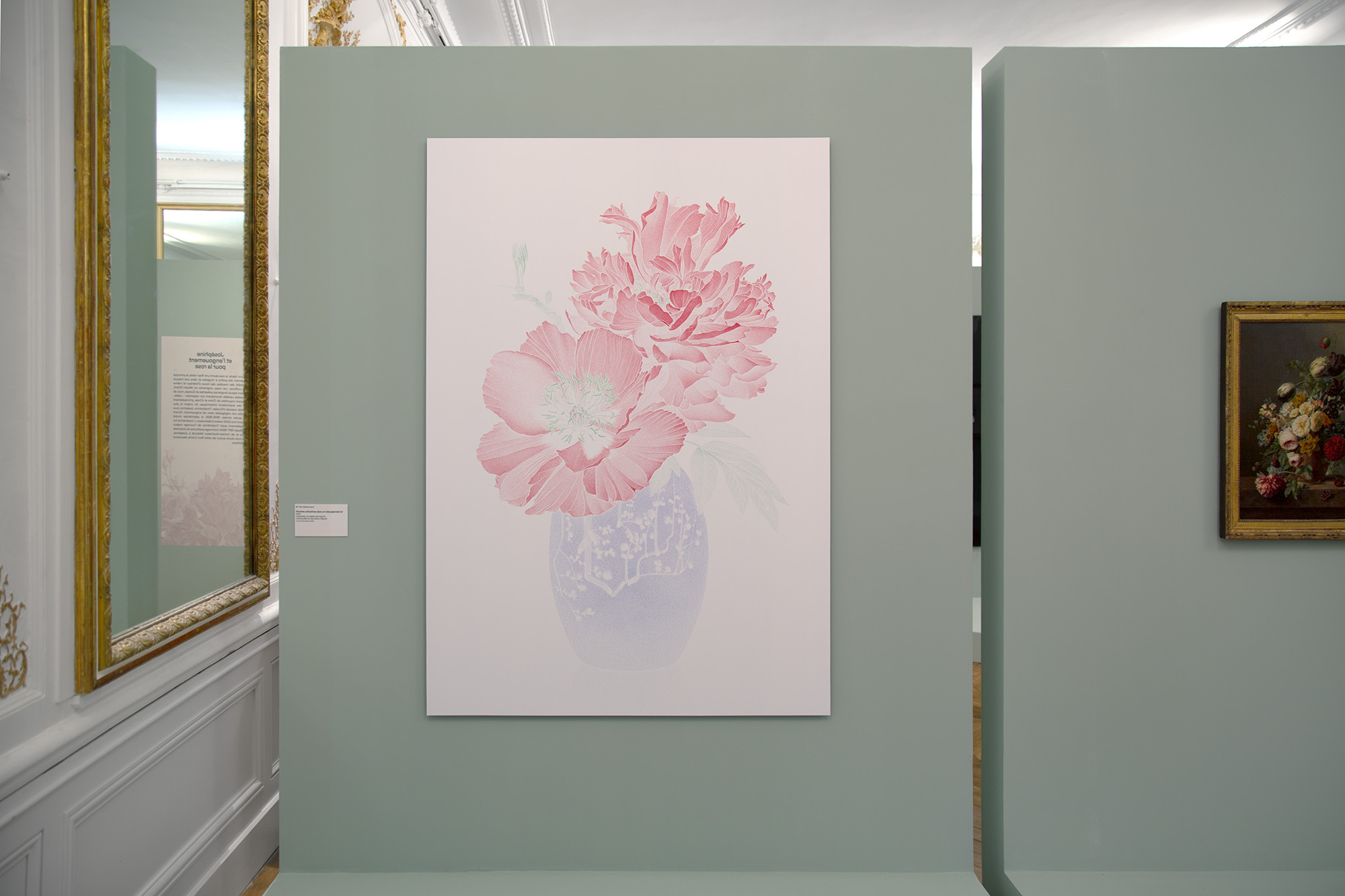
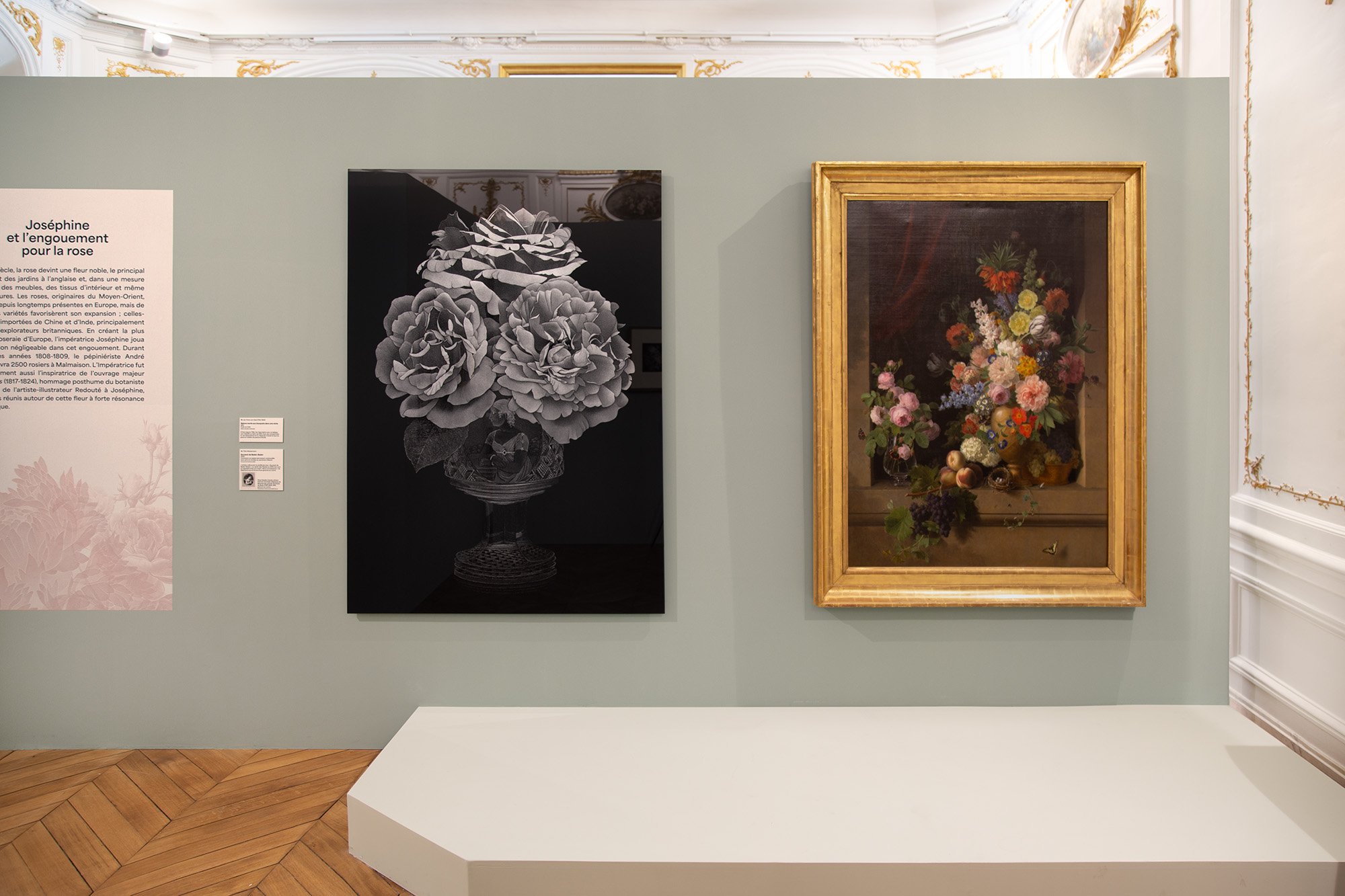
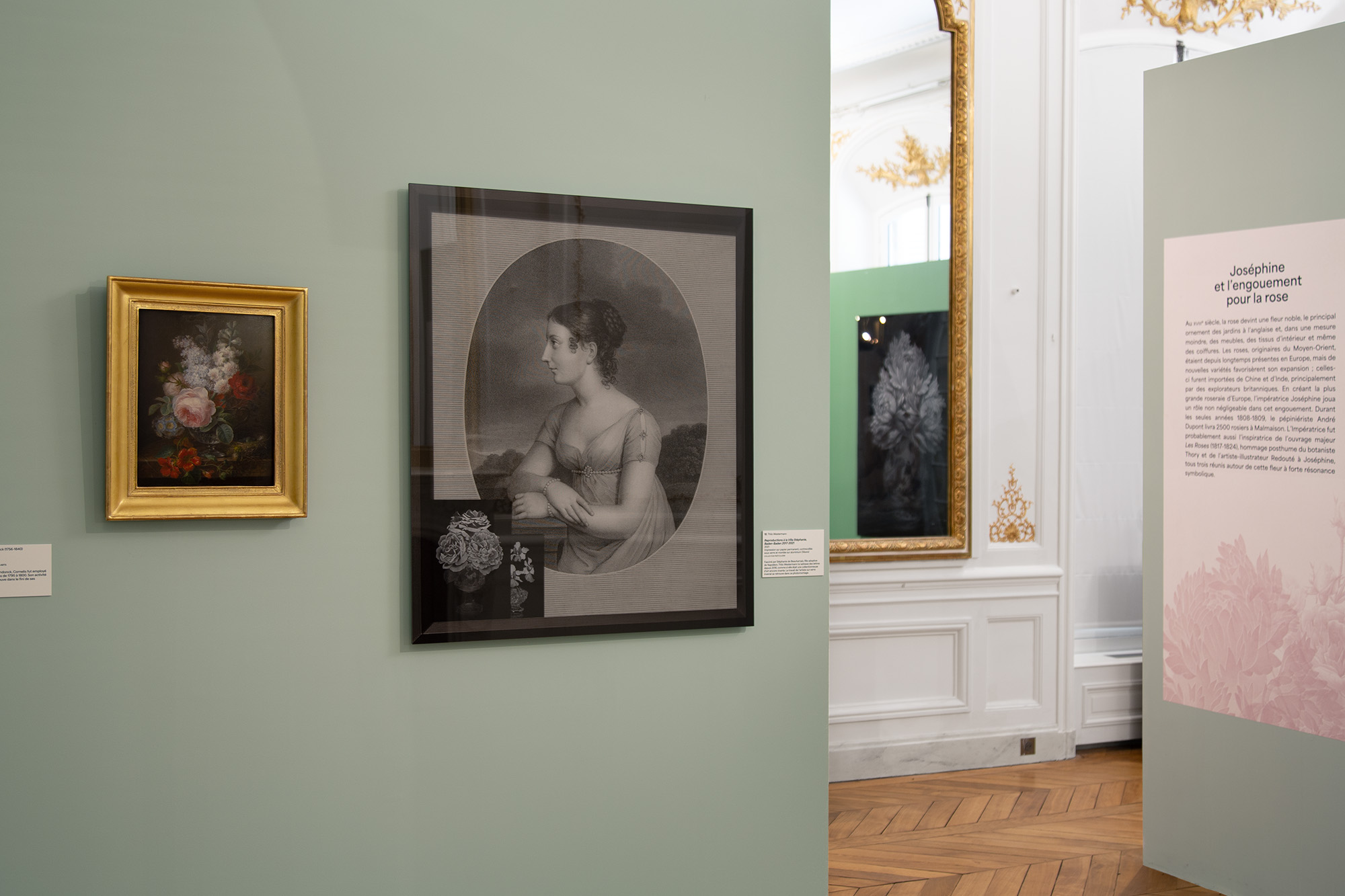
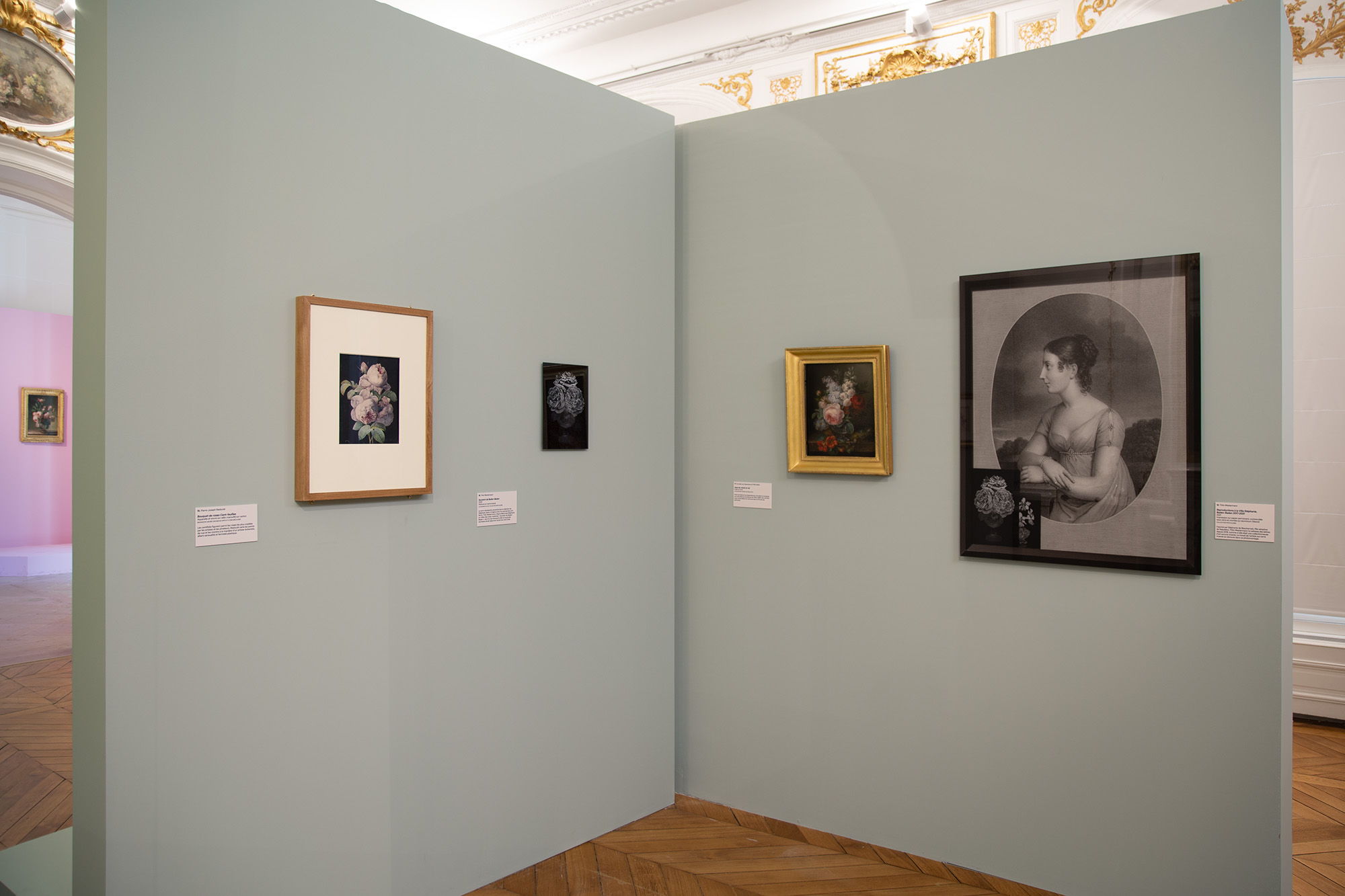
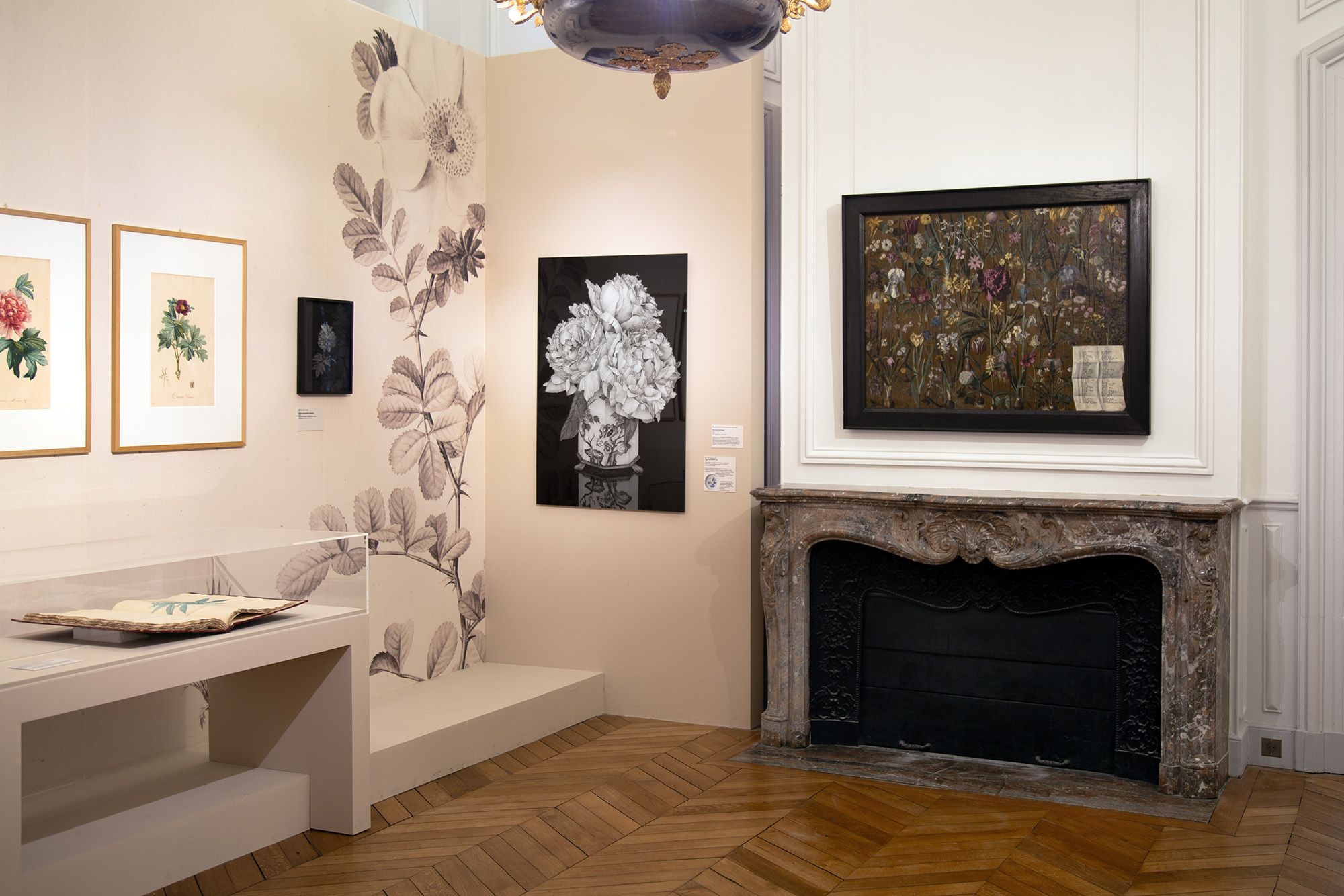
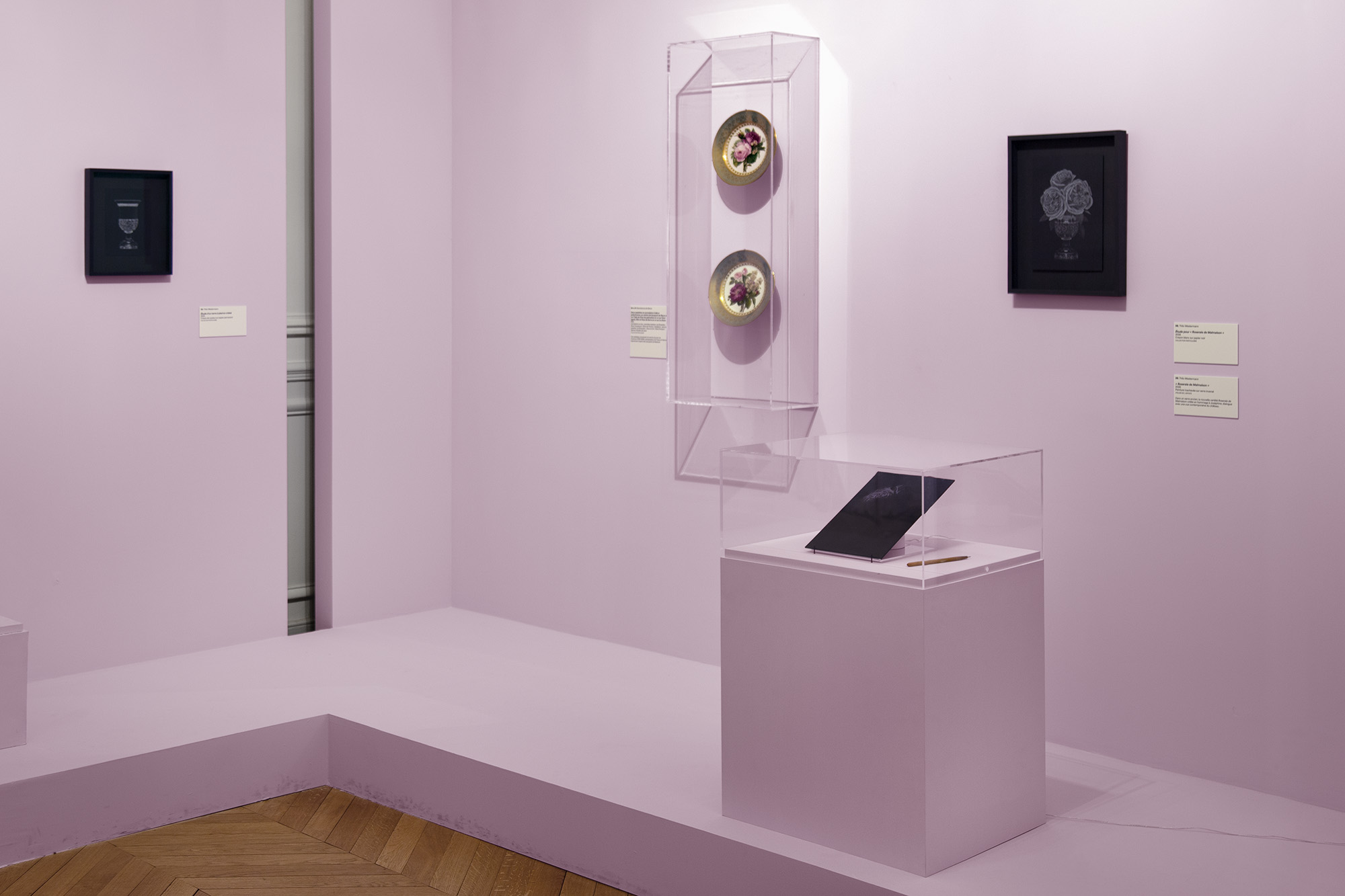
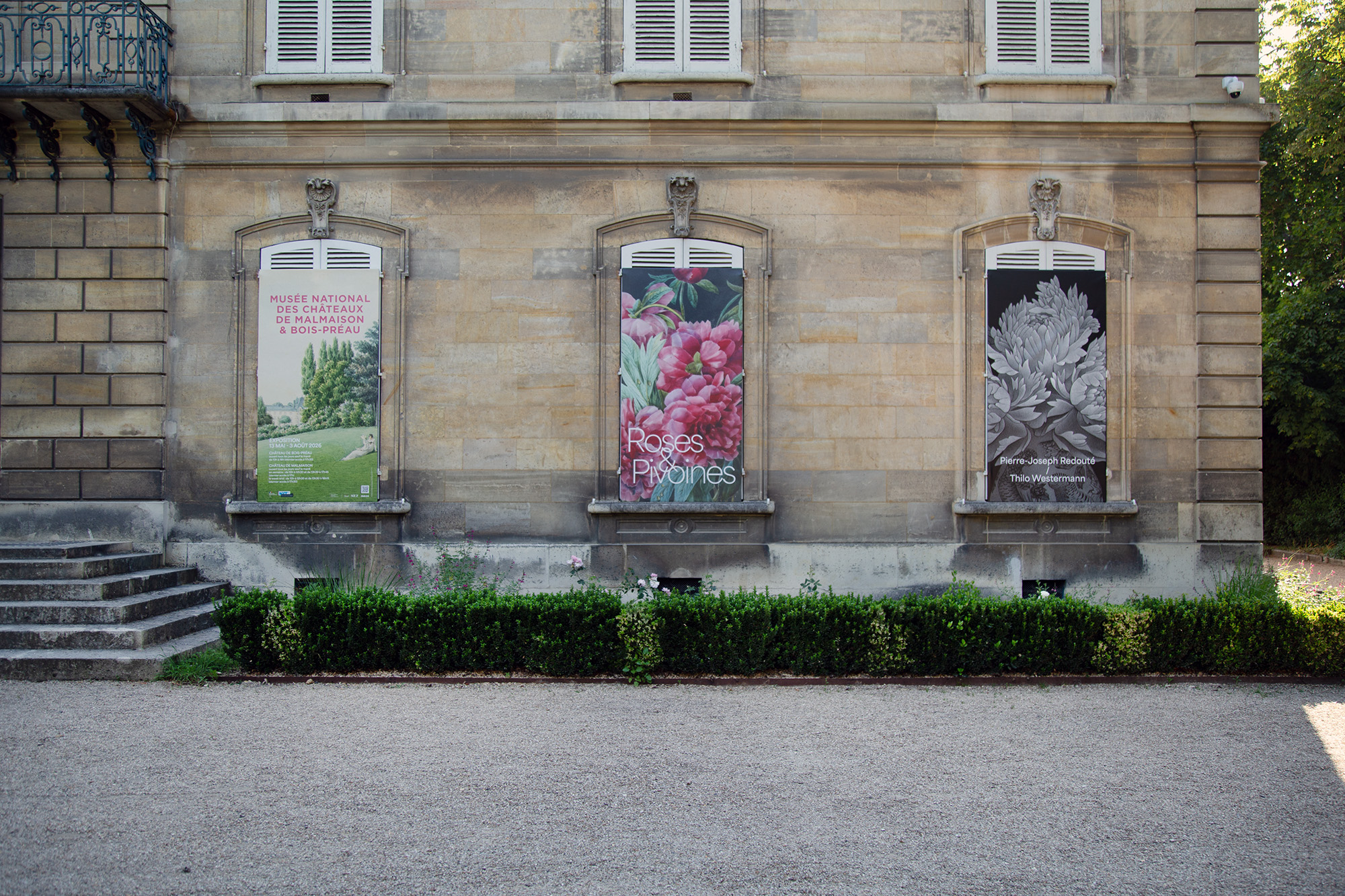
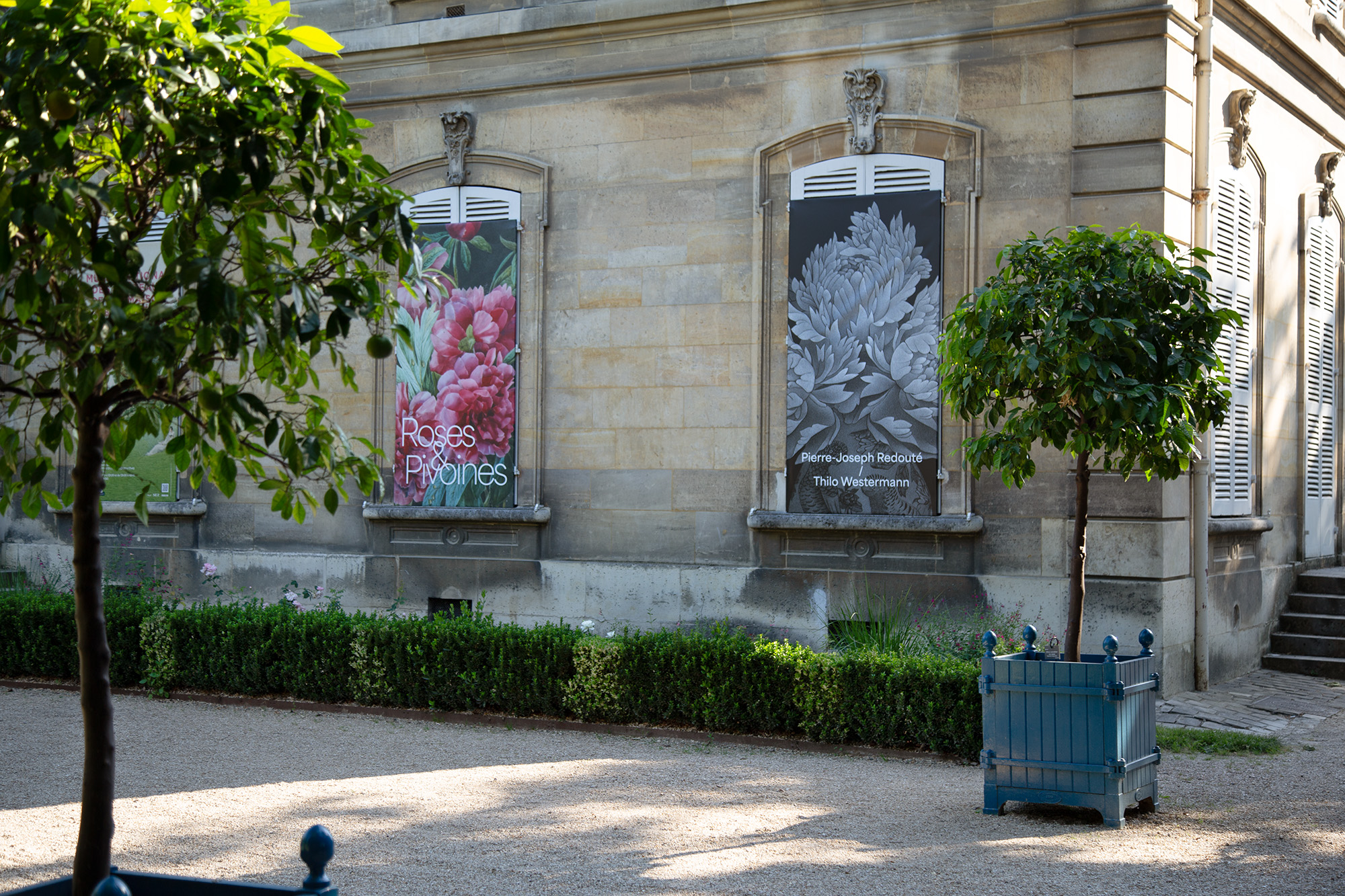
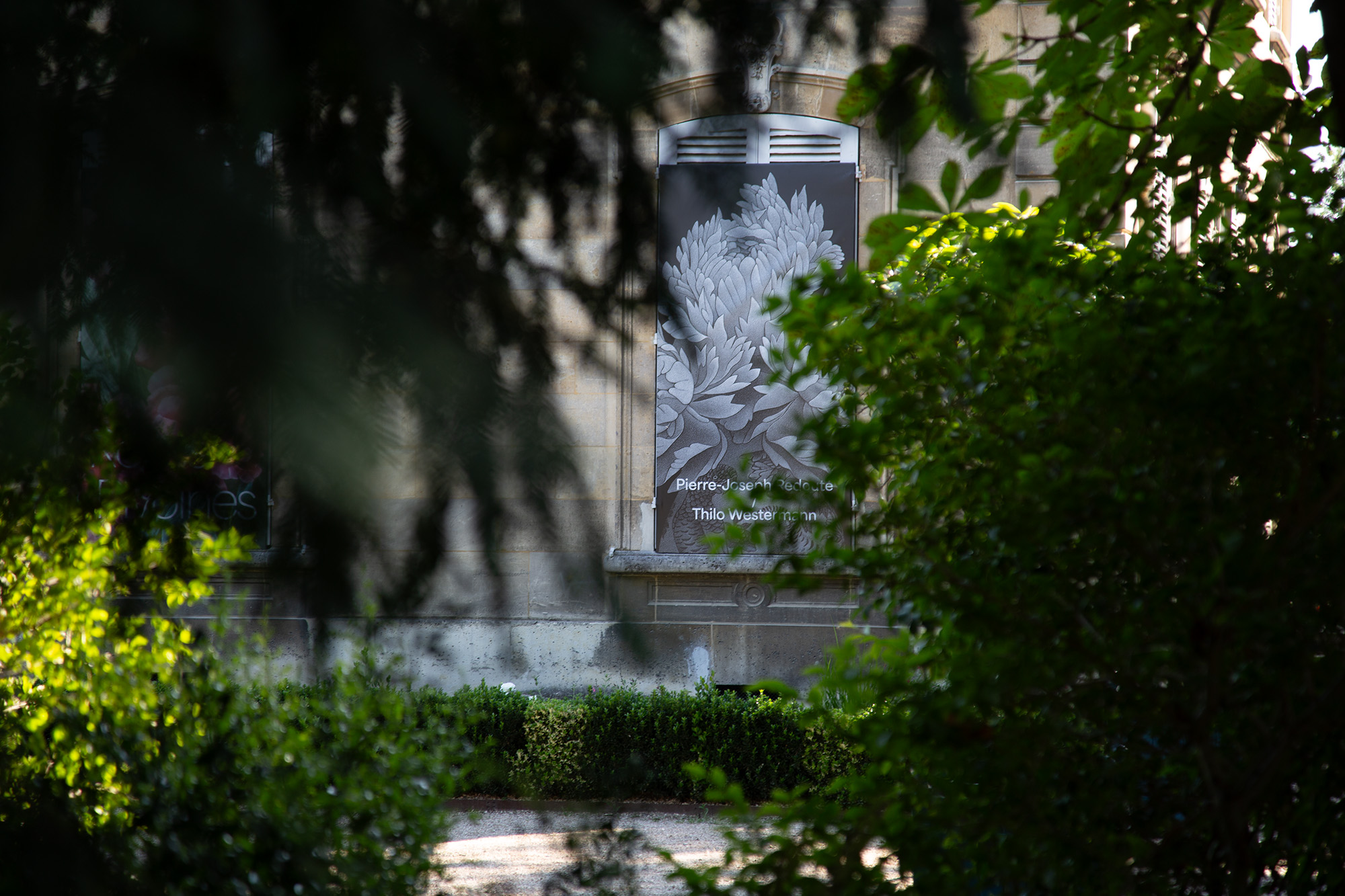
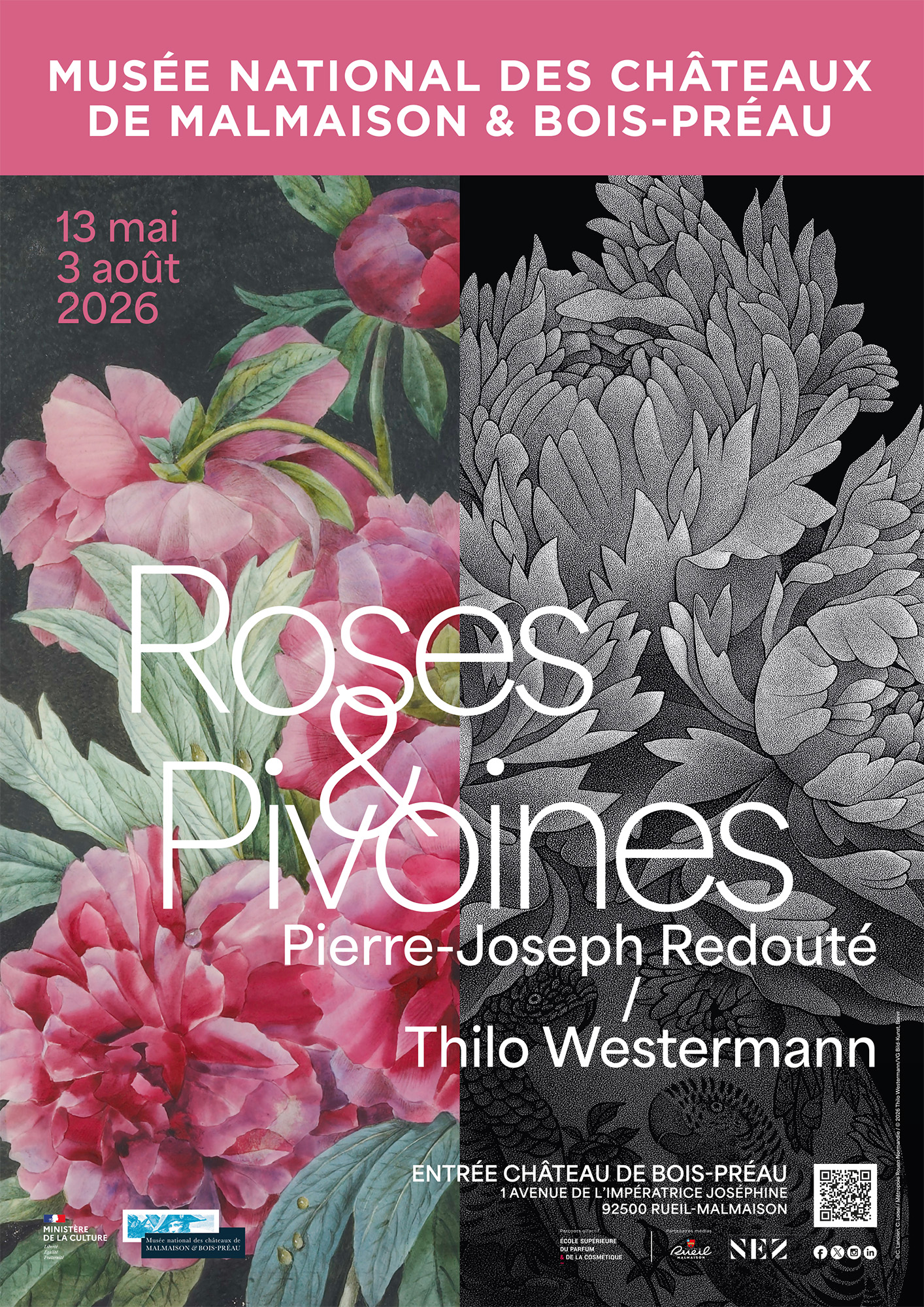
The exhibition Roses & Peonies. Pierre-Joseph Redouté | Thilo Westermann brings Redouté’s original works back to the place of their making. These rare and highly fragile works, created by the artist long celebrated as the ‘Raphael of flowers’, are shown alongside reverse glass paintings, enlarged prints and colored pencil drawings by Thilo Westermann.
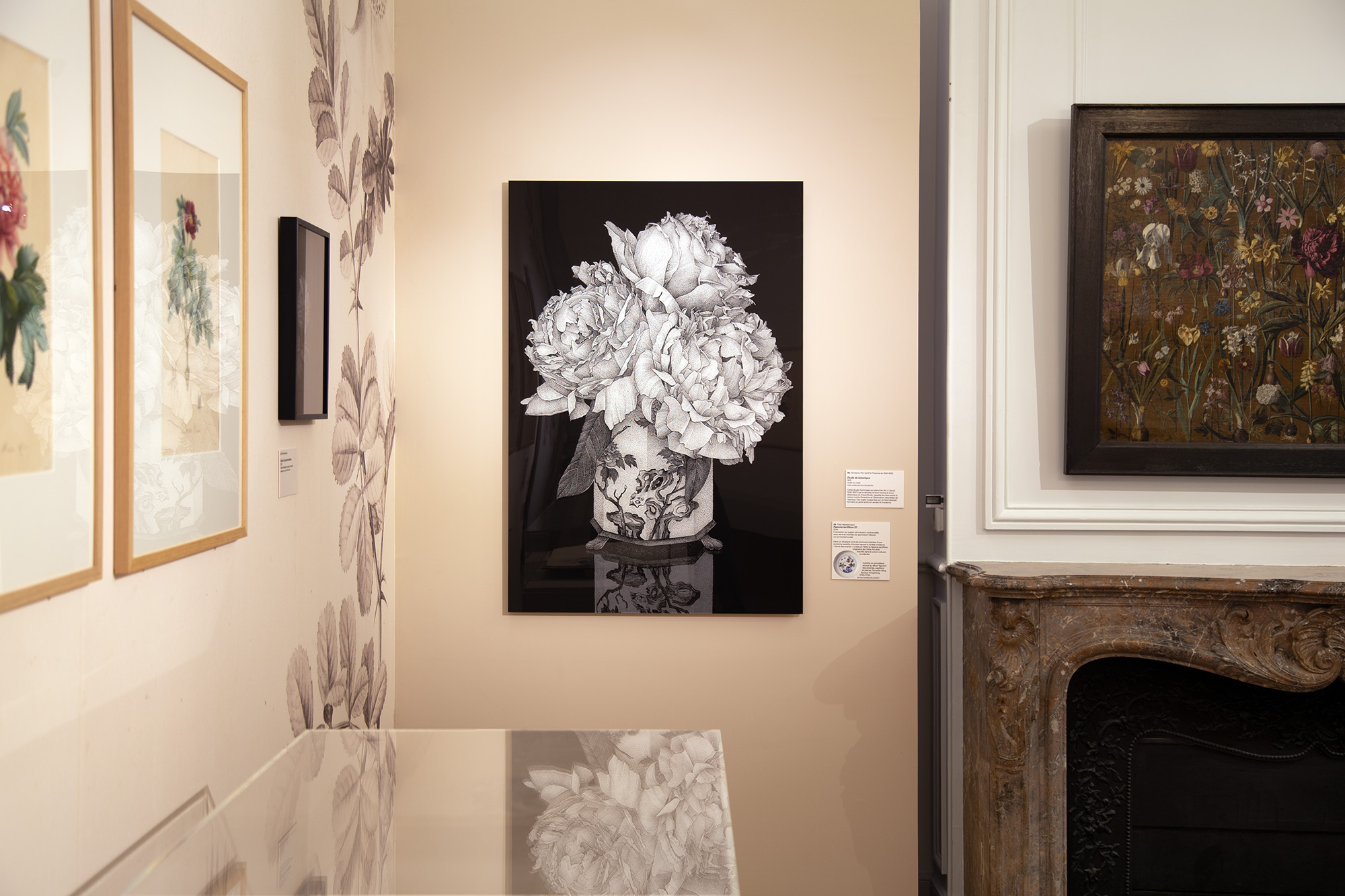
Technically, Westermann’s practice is based on a process akin to working in negative. He creates his motifs by etching them dot by dot from the blackened reverse side of a sheet of glass. The image is then sealed with a layer of white paint. Seen from the front through the glass pane, the etched dots merge into grey shades creating a three-dimensional motif.
After its completion, the reverse glass painting is scanned, enlarged several times, and printed. The large-scale printed image reveals the original motif to be a multitude of dots, and each dot becomes recognizable as the result of a unique action. Consequently, the original image gives way to the individual artistic marks used in its creation.
This meticulous precision finds its counterpart in the refinement, delicacy and subtlety of Redouté’s art. By presenting both botanical plates and floral compositions devoted to roses and peonies, the exhibition illuminates the aesthetic as well as the scientific dimensions of his work. The stipple engravings produced after his compositions form a further point of connection with Westermann’s contemporary practice.
The opening on 12 May 2026 will also mark the first public presentation of a new rose variety, Roseraie de Malmaison. Developed over many years by Maison Guillot, the distinguished rose-breeding house founded in 1829 and still active today, the cultivar will be introduced at Malmaison ahead of its official release the following year. Its name pays homage to Joséphine’s celebrated garden; presented among the roses and peonies in the grounds of the Château de Malmaison, it will extend the exhibition’s botanical and visual echoes into the landscape itself.
The exhibition is accompanied by a catalogue published by Lienart éditions (Paris), with contributions by Christophe Pincemaille and Rémi Cariel (Musée national des châteaux de Malmaison et Bois-Préau) as well as by Xavier Salmon (Musée du Louvre, Paris).
May 13 – August 3, 2026
Musée national des châteaux de Malmaison et Bois-Préau
Château de Bois-Préau
1 B Avenue de l'Impératrice Joséphine
92500 Rueil-Malmaison
www.musees-nationaux-malmaison.fr